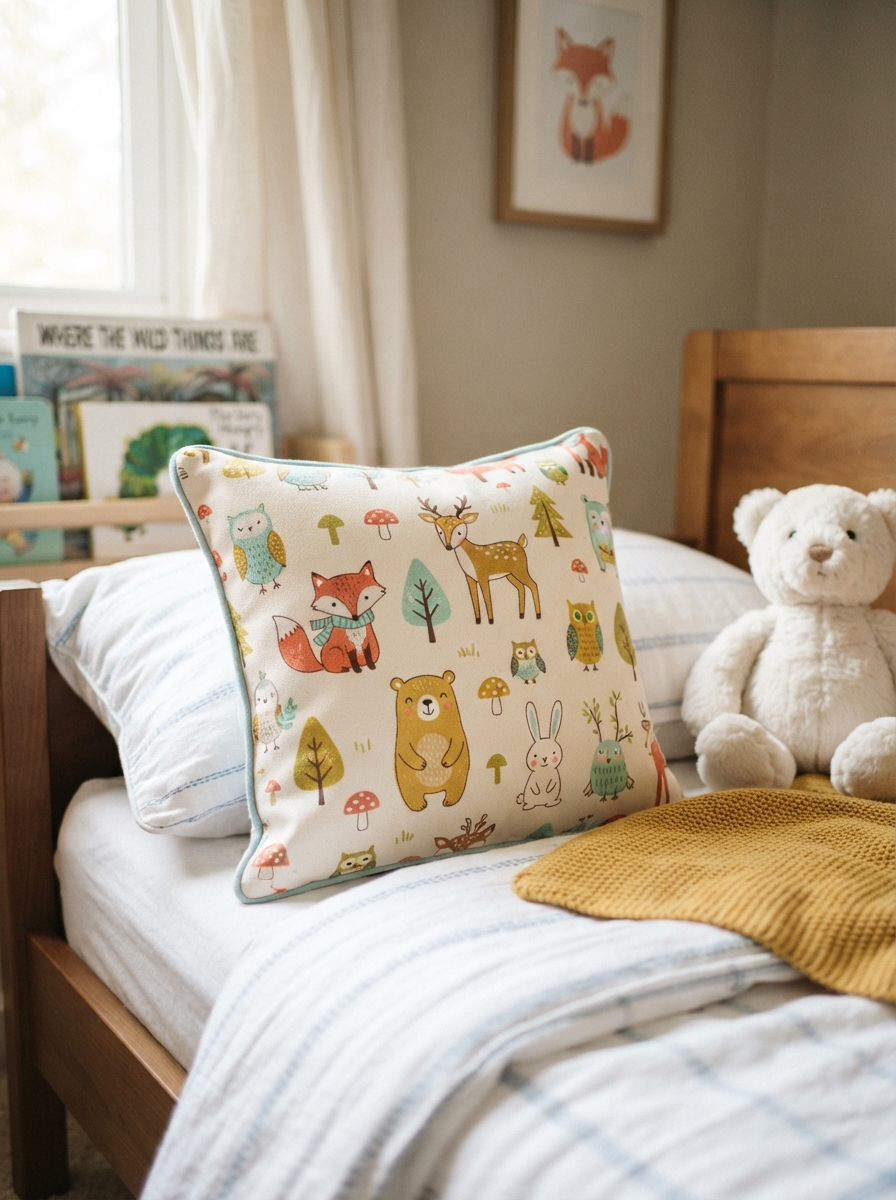
Making a small pillow at home is a fun sewing project that beginners and children can enjoy with adult supervision. It is simple, inexpensive, and a wonderful way to turn colorful fabric scraps into something useful and personal. Whether you want a cozy pillow for a reading corner, a soft decoration for a child’s room, or a handmade gift, this project can be completed with basic sewing supplies.
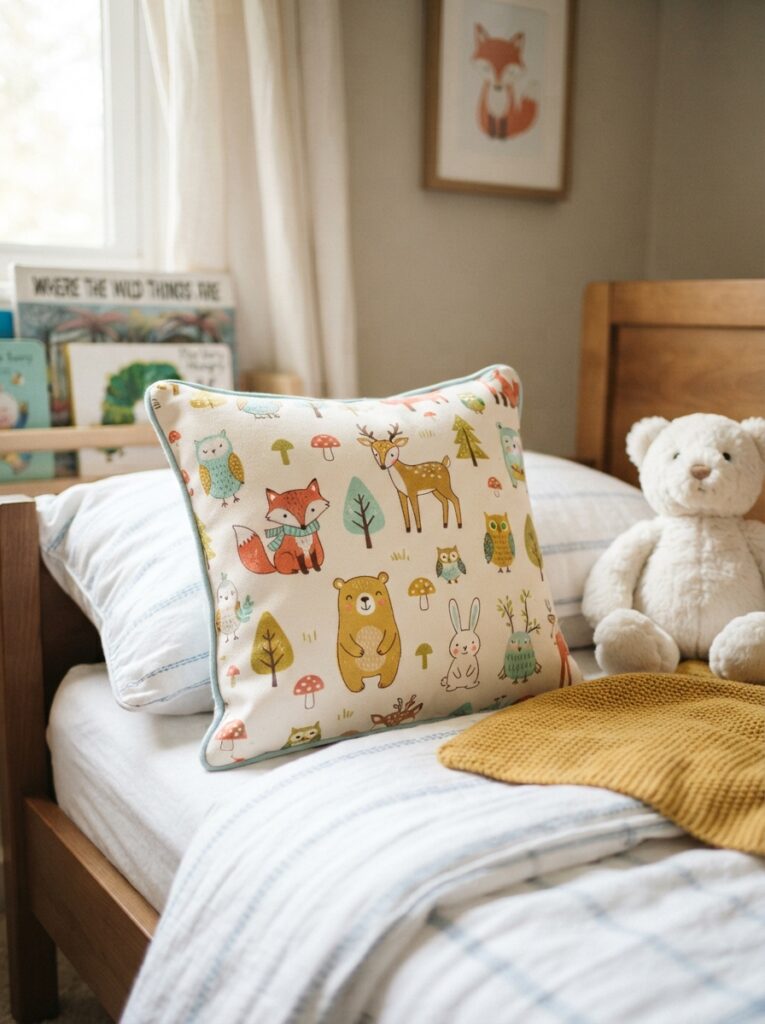
Materials You Will Need
Choose soft, washable fabric that is comfortable for children. Cotton is an excellent beginner-friendly option because it is easy to cut and sew.
| Material | Suggested Amount | Purpose |
|---|---|---|
| Cotton fabric | 2 pieces, about 25 × 25 cm | Pillow cover |
| Polyester fiberfill | 1 small bag | Pillow stuffing |
| Sewing thread | 1 spool | Sewing seams |
| Needle or sewing machine | 1 | Joining fabric |
| Scissors | 1 pair | Cutting fabric |
| Pins or clips | Several | Holding fabric together |
Choosing the Right Fabric
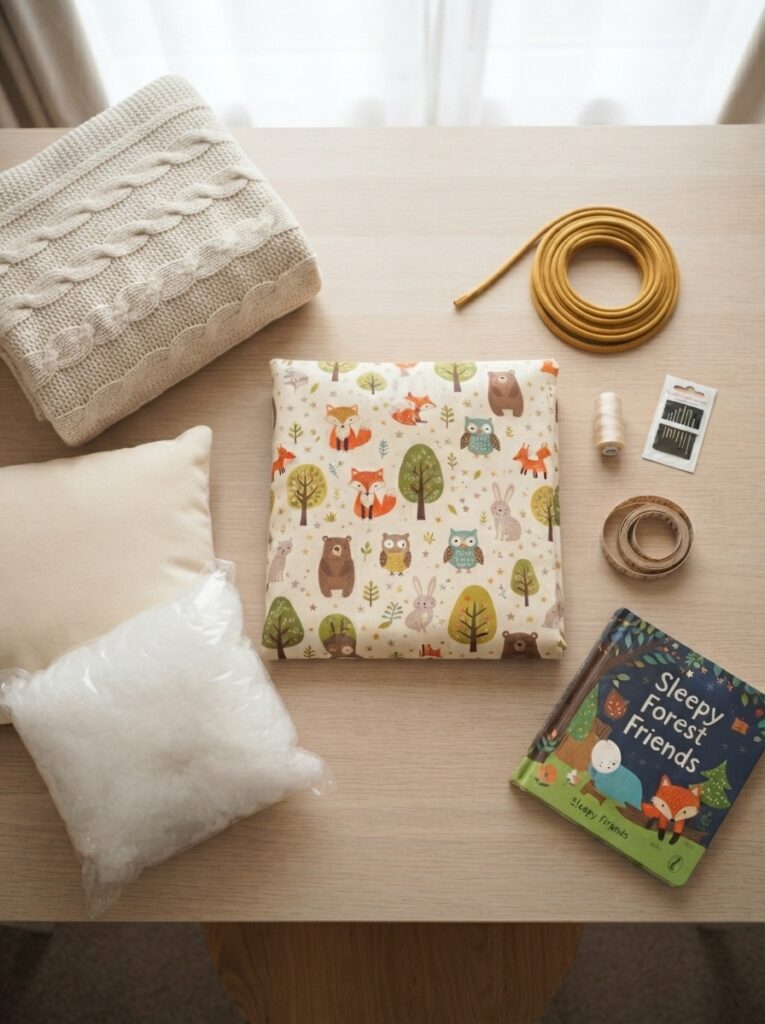
For a child’s pillow, look for fabric that is:
- Soft and comfortable against the skin
- Durable enough for regular use
- Easy to wash
- Free from loose decorations that could become detached
Animal prints, stars, flowers, or favorite colors can make the pillow especially appealing. For example, a child who loves rabbits might enjoy a pastel fabric with small bunny prints.
Cutting and Preparing the Pillow
Create the Pillow Pieces
Cut two matching squares from your chosen fabric. A size of approximately 25 × 25 cm makes a convenient small pillow, but you can adjust the dimensions to suit the child’s room or intended use.
Before sewing, place the two pieces together with the right sides facing each other.
| Step | What to Do | Helpful Tip |
| 1 | Cut two equal fabric squares | Measure carefully for neat edges |
| 2 | Place right sides together | Align all four corners |
| 3 | Pin or clip the edges | Keep pins away from the sewing line |
| 4 | Sew around the edges | Leave a small opening |
| 5 | Turn the cover right side out | Push corners gently |
Sewing the Pillow
Follow these simple steps:
- Secure the fabric. Pin or clip the two squares together around the edges.
- Sew the seam. Stitch around three sides and most of the fourth side, leaving an opening of about 7–10 cm.
- Trim the corners. Carefully reduce bulky fabric at the corners without cutting the stitching.
- Turn the pillow cover. Pull the fabric through the opening and gently push out the corners.
- Add the filling. Insert small amounts of polyester fiberfill at a time, distributing it evenly.
- Close the opening. Hand-stitch the opening securely with small, neat stitches.
| Sewing Stage | Recommended Approach | Common Mistake |
| Straight seams | Use an even stitch length | Sewing too close to the edge |
| Corners | Turn carefully and maintain the seam | Cutting through stitches |
| Stuffing | Add gradually | Overfilling the pillow |
| Final opening | Use small hand stitches | Leaving loose threads |
Practical Tips for Beginners
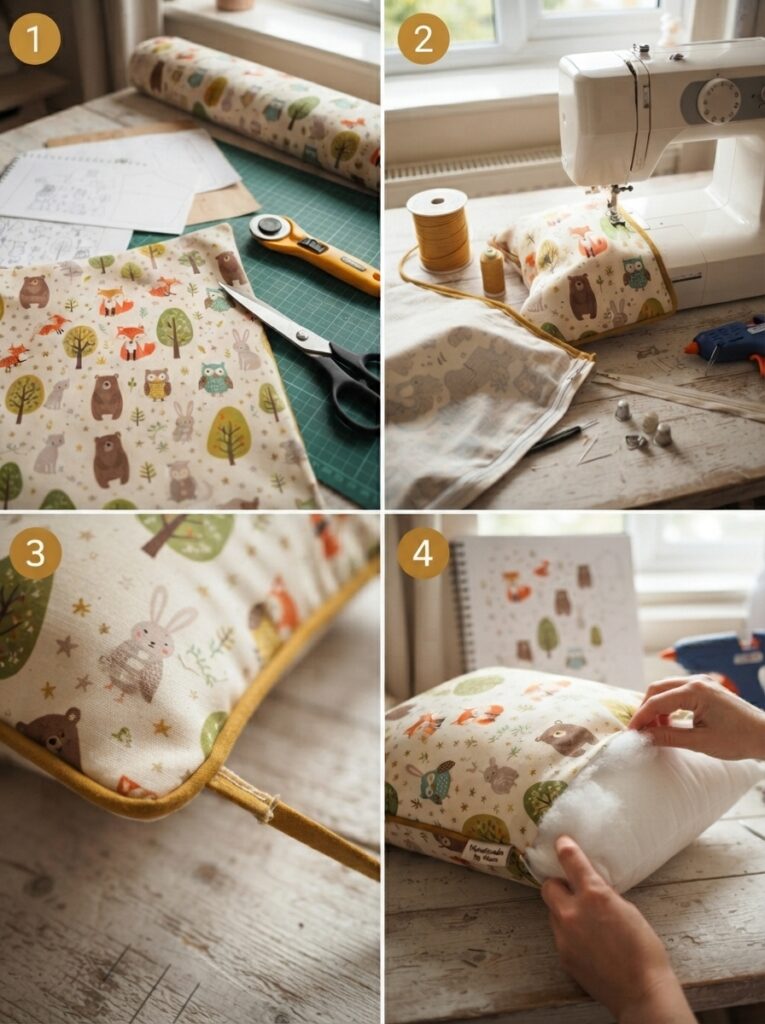
A few small details can make the finished pillow look much more professional:
- Press the fabric before cutting.
- Measure twice before making your cuts.
- Do not overstuff; a slightly flexible pillow is usually more comfortable.
- Check all seams for gaps before giving the pillow to a child.
- Trim loose threads after finishing.
- If a child is helping, let them choose the fabric or help with safe, supervised steps rather than handling sharp scissors or needles.
FAQ
1. What fabric is best for a children’s pillow?
Soft cotton is one of the easiest choices. It is comfortable, widely available, durable, and generally easy to wash.
2. Can I sew the pillow without a sewing machine?
Yes. A small pillow can be sewn completely by hand. Use small, consistent stitches and reinforce the corners for extra strength.
3. How much stuffing should I use?
Use enough filling to give the pillow its shape while keeping it soft. Add the stuffing gradually and distribute it into the corners and center.
4. Can I make a different pillow shape?
Absolutely. Once you are comfortable with a square pillow, try circles, hearts, stars, or simple animal shapes. Make sure the design has smooth seams and is securely finished.
5. How can I personalize the pillow?
Choose a child’s favorite colors, fabrics, or simple appliqué designs. You can also add embroidered initials, provided all decorations are securely attached.
Conclusion
Sewing a small pillow at home is an easy and rewarding beginner project. With a few basic materials, careful cutting, simple seams, and soft filling, you can create a cozy handmade item that feels special. Let children participate safely by choosing colors and patterns, and enjoy turning an ordinary piece of fabric into a charming pillow they can treasure.
Leave a Reply