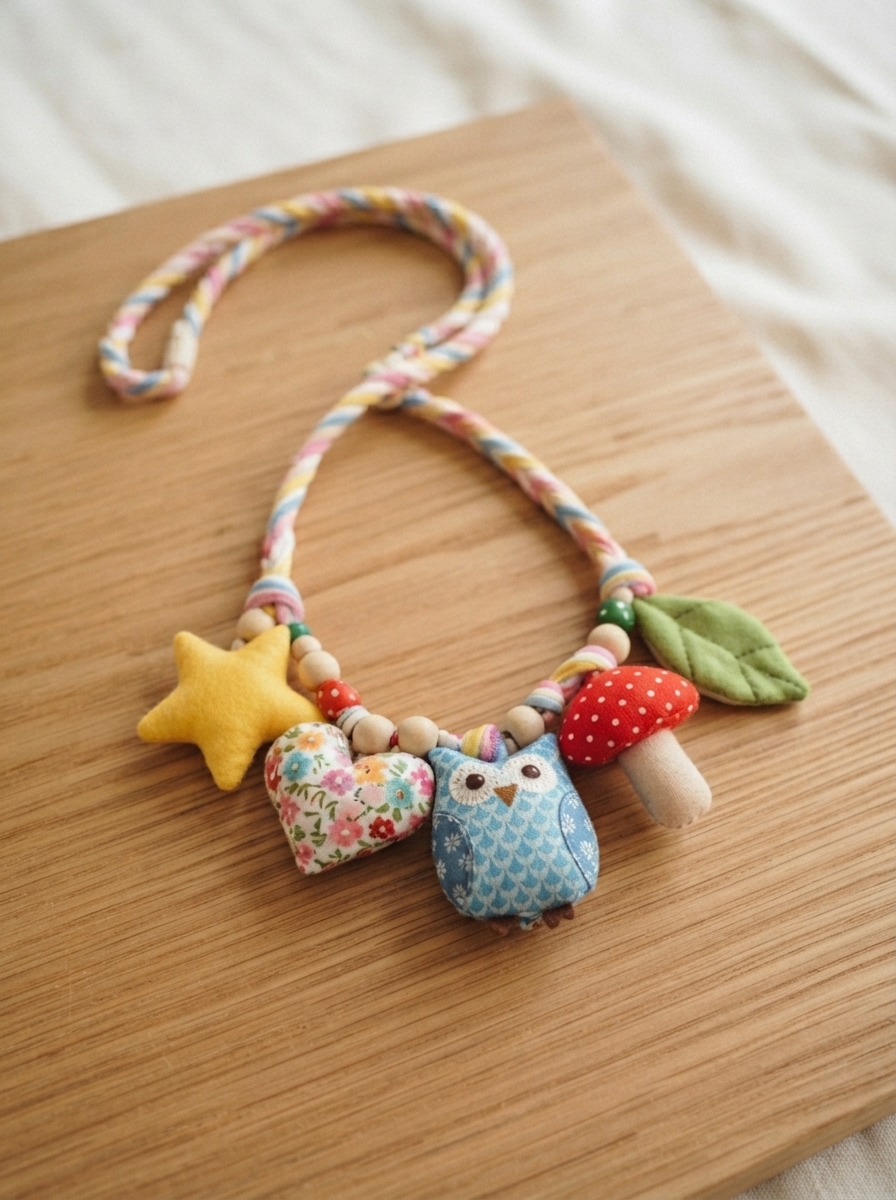
Looking for a fun sewing project that turns colorful fabric scraps into something special? A fabric necklace is a creative beginner-friendly craft that children can help design and decorate with adult supervision. It can be made from soft cotton, requires only a few basic supplies, and offers plenty of opportunities to experiment with colors, shapes, and textures. Best of all, it makes a charming handmade accessory or a thoughtful craft-project gift.
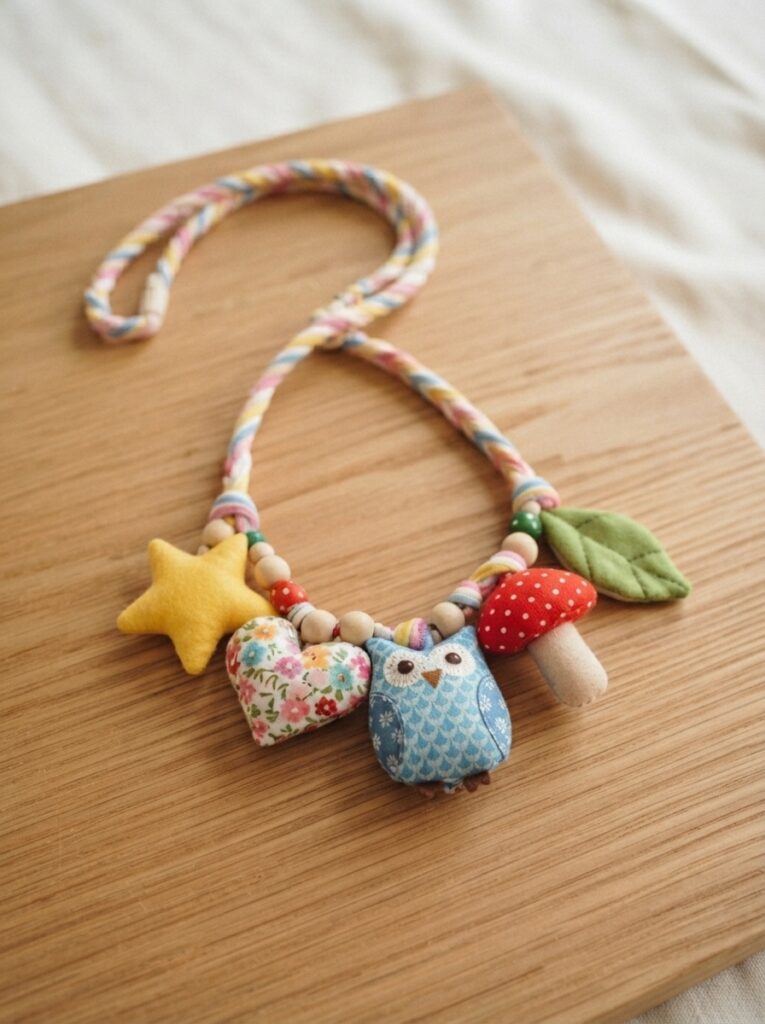
Materials You Will Need
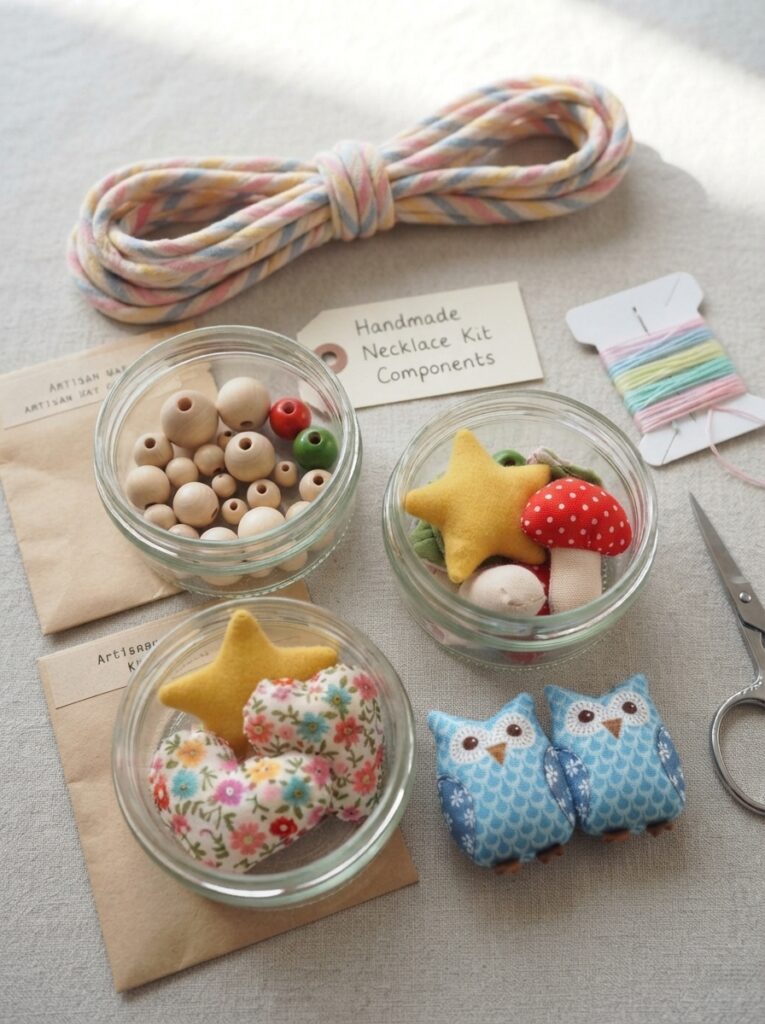
Before beginning, prepare your materials and choose fabrics that are comfortable and easy to sew.
| Material | Suggested Amount | Purpose |
|---|---|---|
| Soft cotton fabric | 30 × 8 cm | Main necklace |
| Polyester fiberfill | Small amount | Soft padding |
| Sewing thread | 1 spool | Joining pieces |
| Needle or sewing machine | 1 | Sewing |
| Fabric scissors | 1 pair | Cutting |
| Soft ribbon | 20–30 cm | Adjustable ties |
Cotton is an especially good option because it is lightweight, washable, and available in many colorful patterns.
Choosing a Simple Design
For beginners, a padded fabric tube is one of the easiest designs. You can also create a flat necklace or combine several fabric sections for a more decorative appearance.
| Design | Difficulty | Ideal For |
| Flat fabric strip | Easy | First sewing projects |
| Padded fabric tube | Easy | Soft, colorful necklaces |
| Fabric flower center | Moderate | Decorative projects |
| Multi-color sections | Moderate | Creative older children |
When choosing materials, avoid rough fabrics and decorations that could easily detach. Keep the finished design lightweight and comfortable.
Preparing the Fabric
Measure and Cut
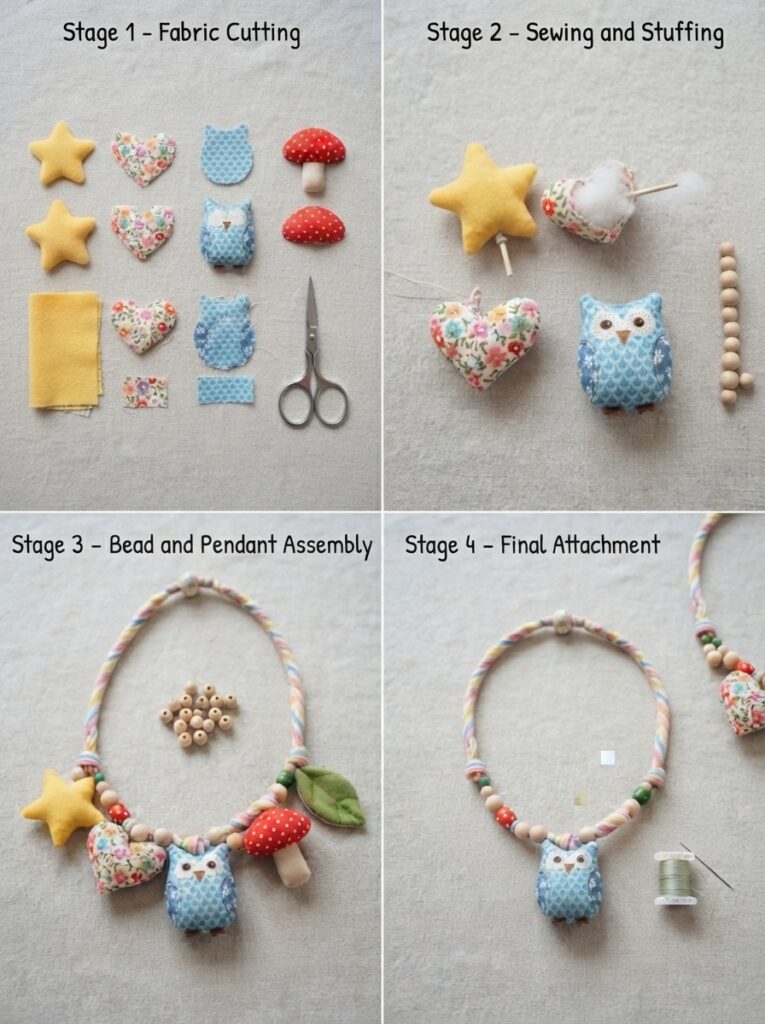
Start by washing the fabric if needed and pressing it flat. For a basic necklace, cut a rectangle approximately 30 × 8 cm. You can adjust the measurements according to the desired finished size.
Follow these preparation steps:
- Measure the fabric carefully.
- Mark straight cutting lines.
- Cut the rectangle with fabric scissors.
- Check the edges for loose threads.
- Choose a coordinating ribbon for the closure.
If you are making the necklace for a child, check the intended fit before sewing the final ends together.
Sewing the Fabric Necklace
Once your fabric is prepared, the main construction is simple.
- Fold the fabric lengthwise: Place the right sides together.
- Sew the long edge: Stitch along the open edge, leaving the ends accessible.
- Turn the tube: Carefully turn the fabric right side out.
- Add filling: Insert small amounts of polyester fiberfill and distribute it evenly.
- Shape the necklace: Gently arrange the padded fabric into the desired curve.
- Close the ends: Fold the raw edges inward and stitch them securely.
- Attach the ribbon: Sew a soft ribbon or fabric tie firmly to both ends.
| Stage | Important Check | Helpful Tip |
| Cutting | Equal measurements | Measure twice |
| Sewing | Even seam | Use consistent stitches |
| Filling | Balanced shape | Avoid overstuffing |
| Closing | No exposed raw edges | Reinforce the ends |
| Ribbon | Secure attachment | Check the stitches |
Creative Ideas for Personalizing It
This is where children can have the most fun. With supervision, let them choose colors, patterns, and combinations.
Try:
- Combining floral and plain cotton.
- Creating a rainbow-colored necklace.
- Adding a simple fabric flower.
- Using leftover fabric from another sewing project.
- Embroidering a simple initial for an older child.
For example, a child who loves animals could select cat-print fabric and pair it with a contrasting solid-color center.
Safety Tips
Adult supervision is important when using needles, scissors, irons, or sewing machines. Avoid tiny detachable decorations, particularly for young children. Inspect the necklace before use and periodically afterward to make sure seams and ties remain secure.
A handmade fabric necklace should be considered an accessory and used with appropriate supervision, not as a toy.
FAQ
1. Can I sew the necklace entirely by hand?
Yes. Hand sewing is suitable for this small project. Use neat, secure stitches and reinforce areas where the ribbon is attached.
2. What fabric works best?
Soft cotton is a reliable beginner choice. It is comfortable, easy to cut, and simple to sew.
3. How much stuffing should I add?
Use enough fiberfill to create a soft, defined shape without making the necklace stiff. Add small amounts gradually.
4. Can I make a flat version?
Absolutely. Simply fold a narrow fabric strip, sew the edges, turn it if necessary, and finish the ends. A flat version requires less filling and is especially simple for beginners.
5. Can children participate in making it?
Yes. Children can choose fabrics, plan colors, and help arrange pieces. Adults should handle sharp tools and supervise every sewing step according to the child’s age and ability.
Conclusion
A fabric necklace is a simple and enjoyable way to introduce children to sewing and creative design. With soft cotton, basic stitching, and a little imagination, fabric scraps can become a colorful handmade accessory. Keep the design lightweight, secure every seam, choose child-friendly materials, and let children contribute safely to the creative process. The result is a practical craft that is both personal and fun to make.
Leave a Reply