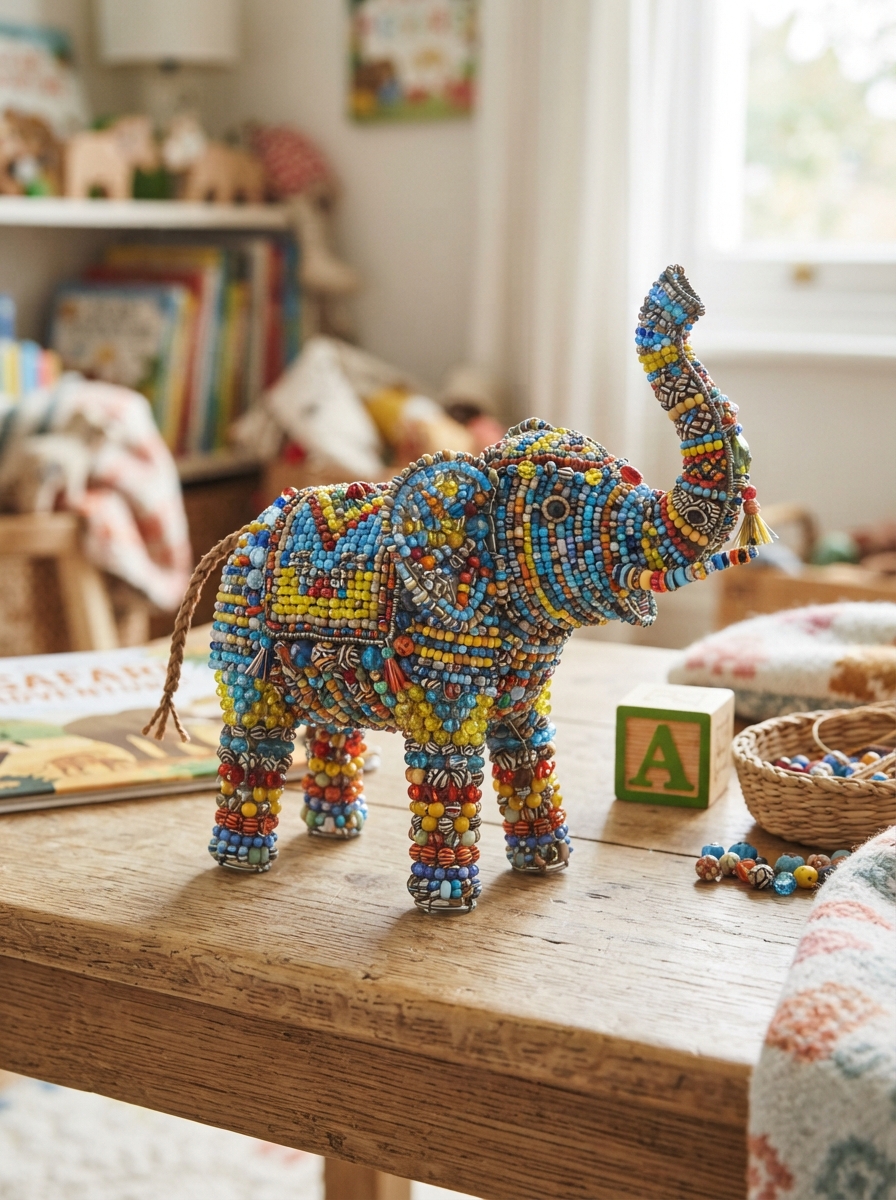
Looking for a fun craft that children can make with colorful beads? A beaded elephant is a wonderful beginner-friendly project that combines creativity, pattern recognition, and fine-motor practice. With a few simple supplies and an easy design, children can create a cute elephant to use as a decoration, backpack charm, or handmade gift.
Materials You’ll Need
Before beginning, prepare everything on a flat, well-lit surface. A small container or tray can help keep the beads organized.
| Material | Suggested Amount | Purpose |
|---|---|---|
| Gray pony beads | 25–40 | Main body |
| Black beads | 2 | Eyes |
| Pink beads | 2–4 | Ear details |
| White beads | 2–4 | Tusks or accents |
| Craft wire or elastic cord | 60–90 cm | Connecting beads |
| Scissors or wire cutters | 1 pair | Cutting the cord or wire |
For younger children, use larger beads and provide close adult supervision because small beads can be a choking hazard.
Choose Your Elephant Colors
Gray is the classic choice, but children can create elephants in almost any color. Bright beads can make the project especially appealing for younger crafters.
| Elephant Part | Suggested Color | Alternatives |
| Body | Gray | Blue, purple, pink |
| Ears | Gray | Pink or white |
| Eyes | Black | Dark brown |
| Tusks | White | Cream |
| Tail | Gray | Brown or black |
For a classroom activity, give each child a different color combination and let them create a small collection of unique elephants.
Step-by-Step Instructions

1. Prepare the Cord or Wire
Cut approximately 60–90 cm of craft wire or elastic cord, depending on the size of the design. Leave extra material at both ends so you can secure the finished elephant.
Place the first beads near the center. Keeping both ends of the cord even will make it easier to build a balanced design.
2. Create the Elephant’s Head
Start with several gray beads to form the head. Add black beads for the eyes and use pink beads if you want to highlight the inside of the ears.
Follow these basic steps:
- Thread the first row of beads.
- Add the beads for both ears.
- Place the black eye beads in the appropriate positions.
- Add a few beads extending downward for the trunk.
- Pull the cord gently to keep the rows together.
Do not pull too tightly. The beads should stay secure while still allowing the shape to remain flexible.
3. Build the Body
Continue threading gray beads to create the elephant’s body. Make the middle section slightly wider than the head.
You can add small rows underneath to represent the four legs. A simple elephant does not need a highly detailed pattern—the recognizable ears and long trunk are what give it character.
Finishing the Design
| Detail | Easy Technique | Purpose |
| Large ears | Wider bead sections | Creates the elephant shape |
| Trunk | Short vertical strand | Defines the face |
| Eyes | Black beads | Adds expression |
| Tusks | White beads | Adds detail |
| Tail | Short bead strand | Completes the body |
When the elephant is finished, secure the cord or twist the wire carefully. Trim excess material and make sure there are no sharp wire ends.
Helpful Tips for Children

- Sort beads by color before starting.
- Use a tray to prevent beads from rolling away.
- Begin with a simple pattern.
- Count the beads in each row.
- Take short breaks during longer projects.
- Keep extra beads stored safely when not in use.
For example, a child could make a pink elephant with purple ears and white tusks, then turn it into a backpack charm. This adds a practical purpose to the craft and makes the finished project more exciting.
FAQ
What beads are easiest for beginners?
Large pony beads are generally easier for children to hold and thread than very small beads. They also offer large openings that make threading simpler.
Can toddlers make this craft?
Small beads are not appropriate for toddlers because they can be a choking hazard. Older children can participate with suitable materials and adult supervision.
Should I use wire or elastic cord?
Both can work. Wire is useful for shaping a figure, while elastic cord is flexible and easy to thread. Choose the material that best matches the pattern.
Can I make the elephant into a keychain?
Yes. Add a secure loop or keychain ring to the finished design. Check the connection carefully before attaching it to a backpack.
What if my elephant looks different from the pattern?
That’s perfectly fine. Handmade crafts do not need to be identical. Encourage children to experiment with colors, bead arrangements, and sizes.
Conclusion
Making a beaded elephant is a simple and enjoyable activity for children who love animals and colorful crafts. By sorting beads, following a basic pattern, and carefully assembling each section, children can practice patience, coordination, and creativity. Whether displayed at home, used as a backpack charm, or given as a gift, each handmade elephant becomes a fun reminder of what children can create with their own hands.
Leave a Reply